

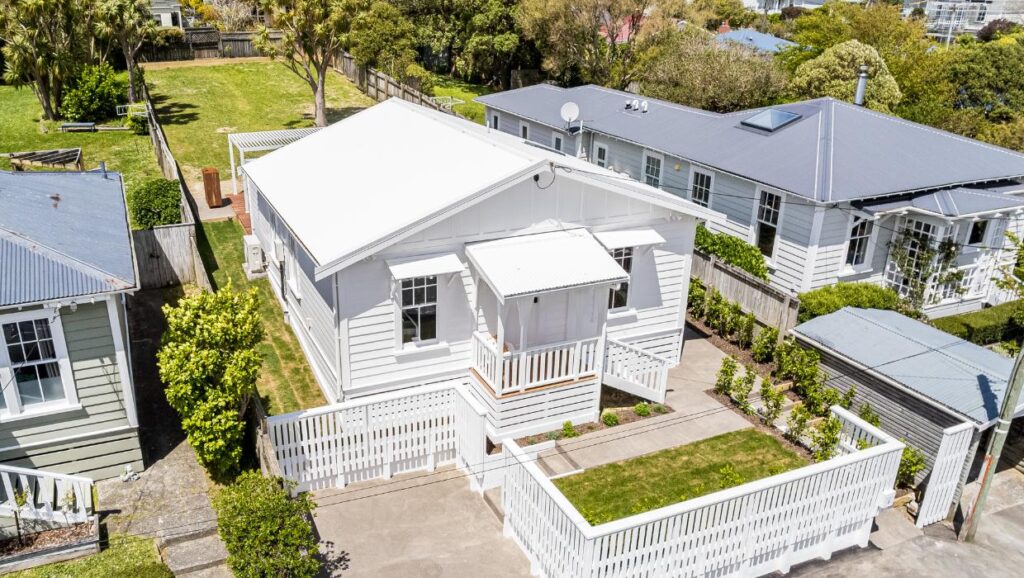
It was hot property back in April, despite its incredibly dilapidated condition. This Wellington railway cottage received ten offers at tender, eight from flippers – buyers looking to renovate and on sell.
And the successful purchaser was one of those eight. Nic Patterson paid $650,000 for the property, one of a select group of historic railway cottages in Ngata St, Ngaio.
He has spent the past six months completely transforming the house, nearly doubling its value. It had been home to the same family for 37 years – they bought it from the NZ Railways back in 1988 for $85,000.
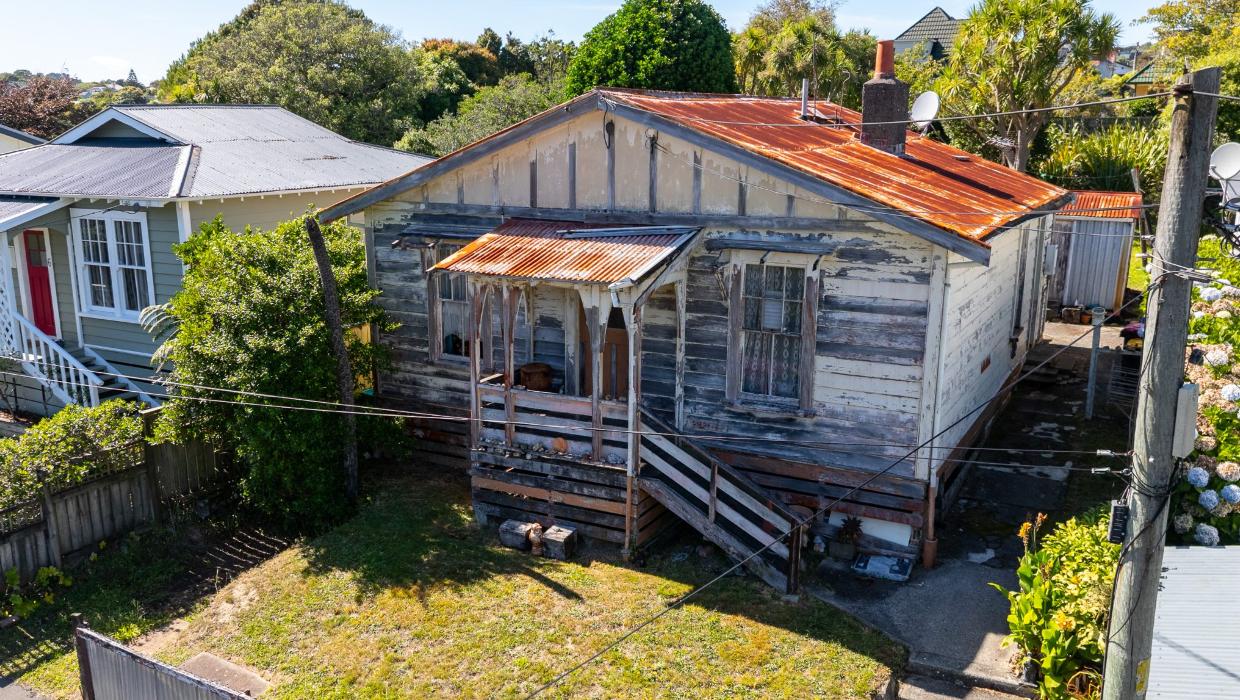
Before: The cottage was in hot demand back in April, when it featured on Stuff. It was bought by builder Nic Patterson who could instantly see the potential. Photo: Collective
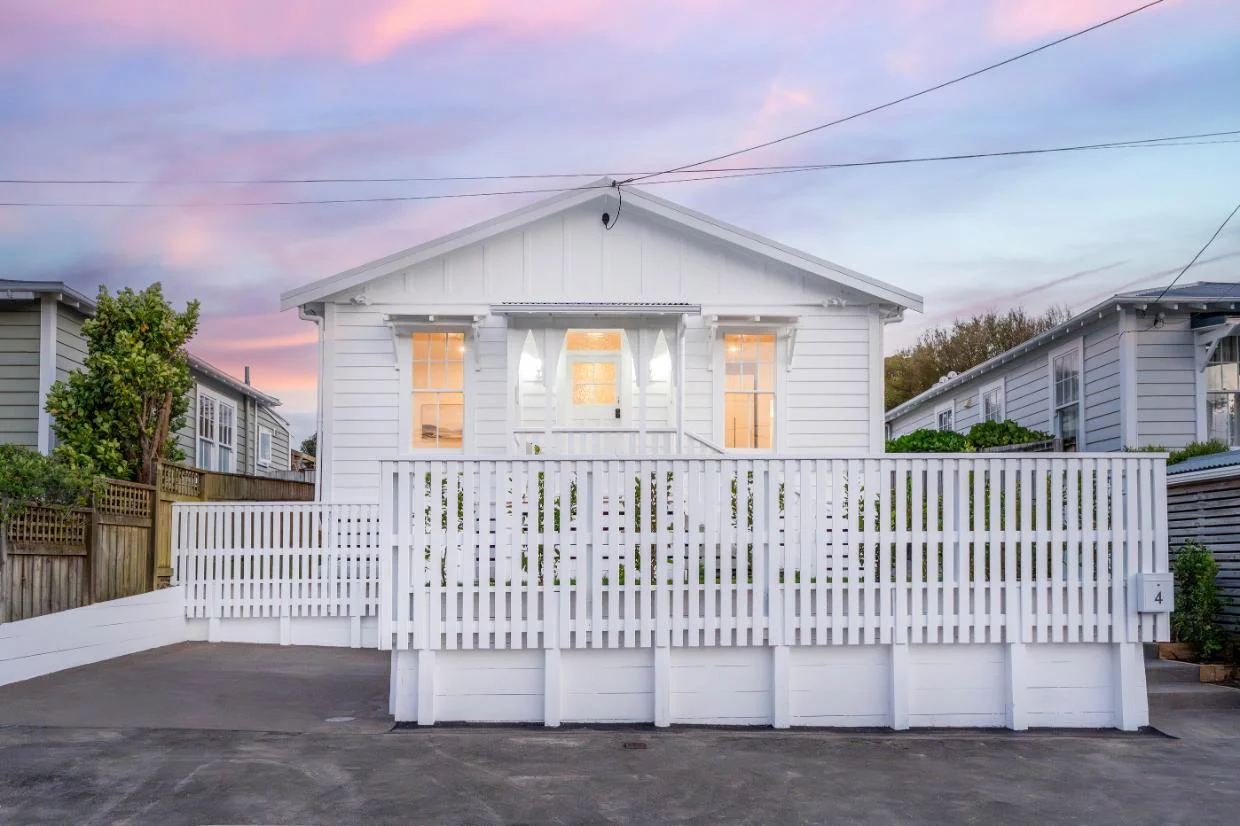
Patterson has painted everything white so the hedging will stand out strongly in contrast as it grows. There is an EV power point with the off-street parking. Photo: Tommy’s
The sale price six months ago was considered fair for the condition. A local agent told Stuff that people “pay a premium in this little enclave because of the character of the heritage zone”.
But Patterson, who runs BK Patterson Builders, says he knew he was getting “a good one”: “A lot of tradies got to the site and were going ‘holy crap look at all the work’, but I could see something right from the start.
“I love these properties that require absolutely everything. I knew it was a really good buy. The redwood cladding had no paint left on it, but it was in reasonable order. It wasn’t rotten. We replaced the roof, but the piles were still sound. It wasn’t that things had failed, more just a lack of maintenance.
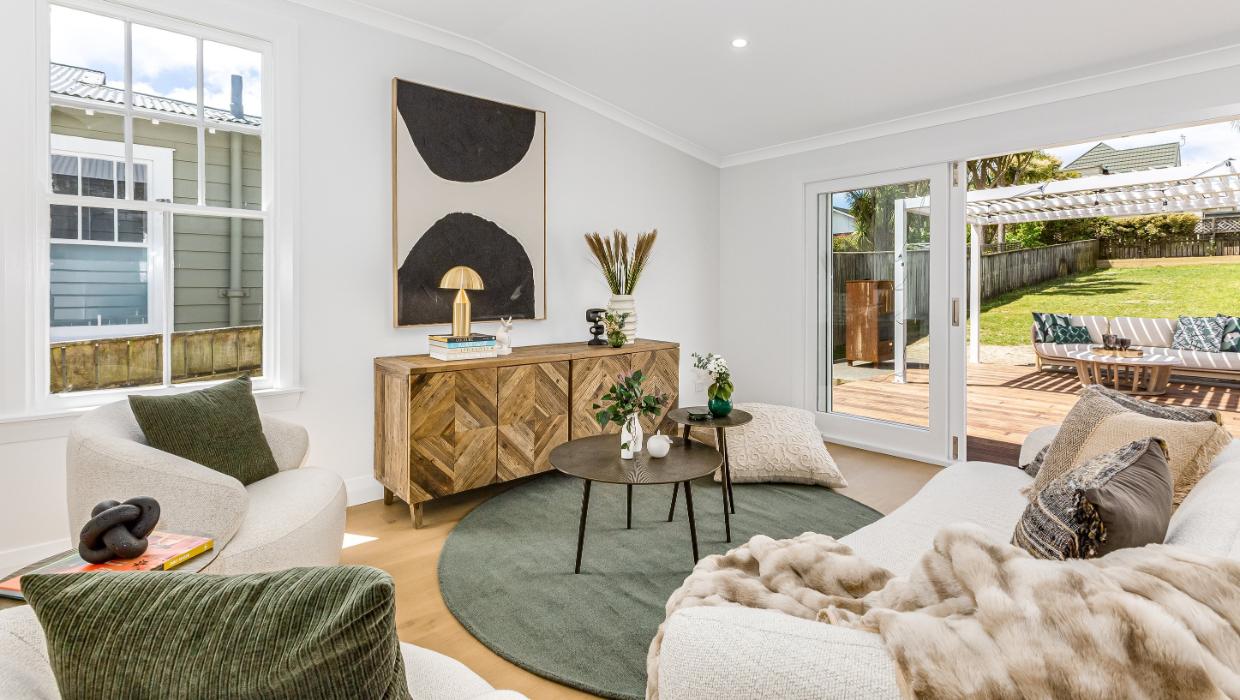
The house has been beautifully presented for sale – the floors are hardwood. Photo: Tommy’s
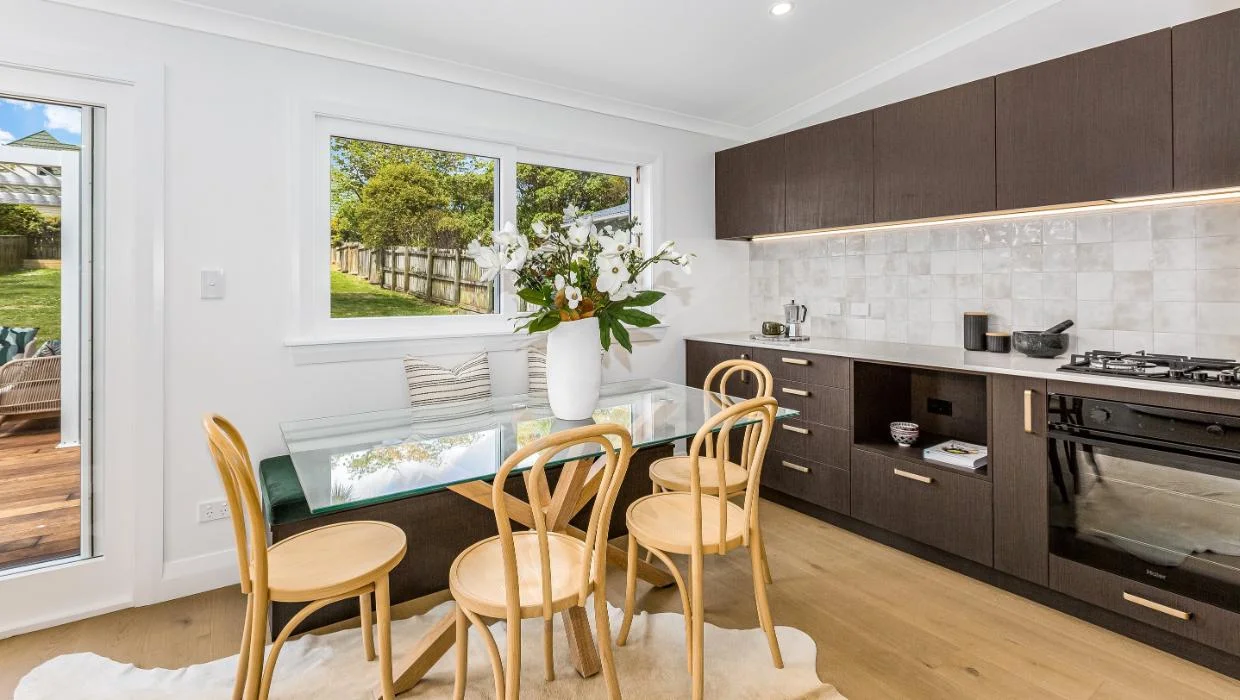
There is now open-plan living and an easy flow to the rear section and new deck. Photo: Tommy’s
“We couldn’t save the floors. The bathroom was leaking and we replaced a lot of that timber.”
The entire house was re-plumbed, re-wired, re-roofed, re-lined and insulated throughout.
Patterson says his firm “does everything – we love carpentry”. But he was particularly enamoured with this project. “I got carried away with a few things on the property, which is what happens when put your passion into a project.”
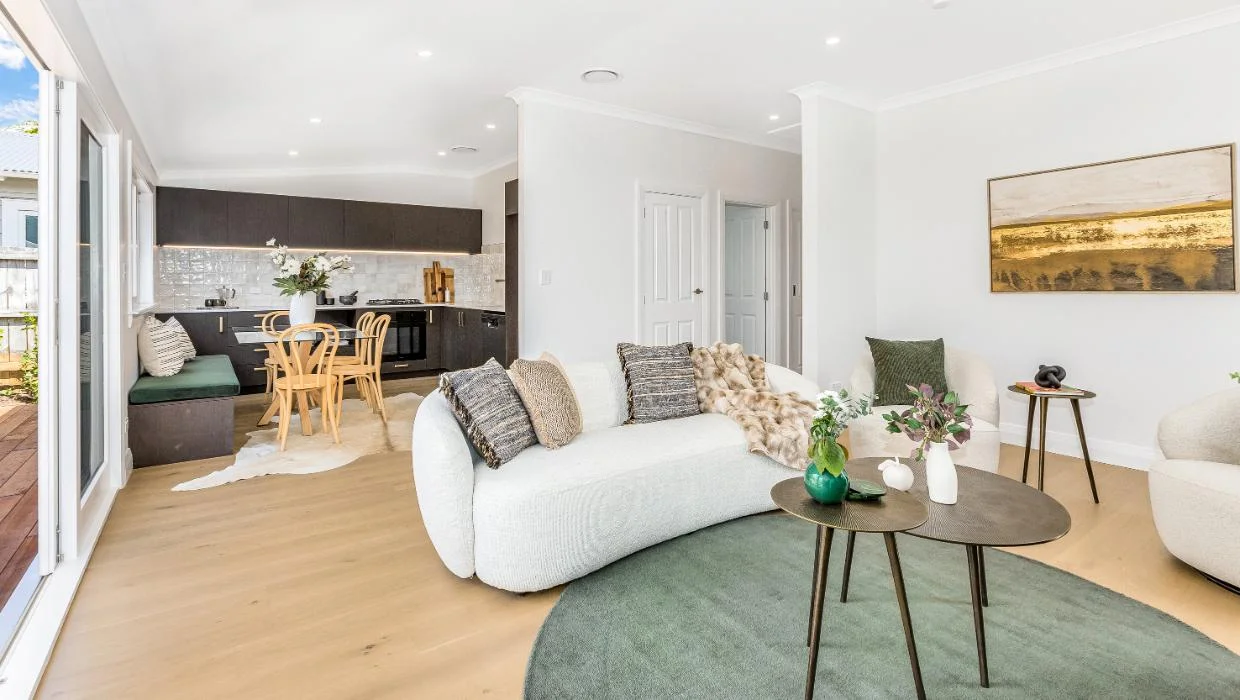
The house has three bedrooms and two bathrooms as well as extra storage. Photo: Tommy’s
He says he was partly inspired by Ponsonby villas: “I wanted to leave all the heritage features while still having a contemporary-modern look on the inside.
“And I wanted a yard where kids could grow up, just like we had when I was young. Everyone seems to want outdoor areas now – people don’t want to have to go out.”
Patterson also changed around the layout (92m²) to better reflect the desire for open-plan living and an easy flow to the outdoors.
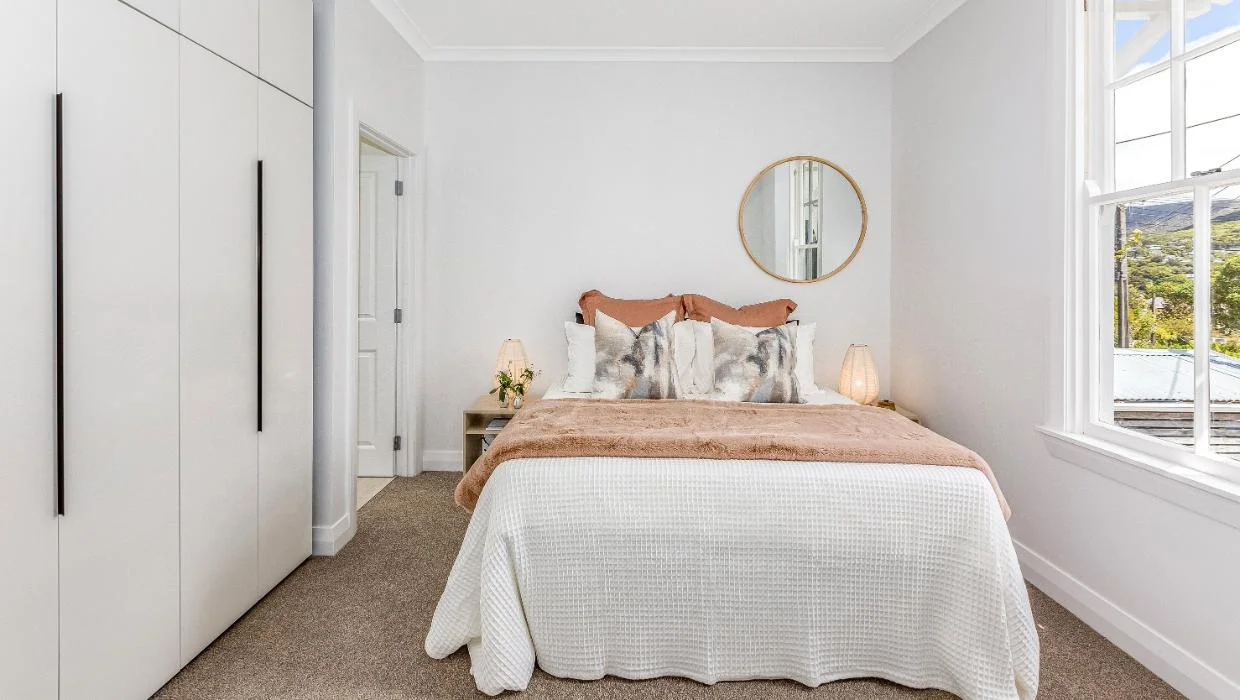
There are huge new wardrobes and carpet in the bedrooms. Photo: Tommy’s
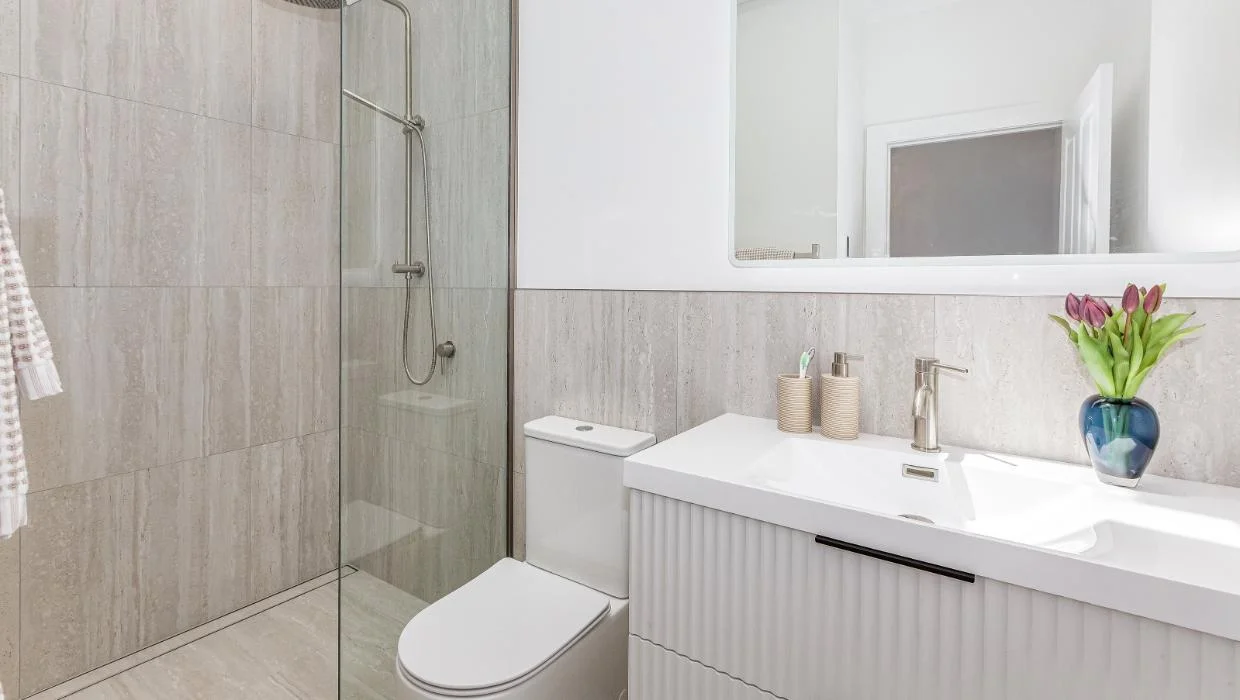
The tiled bathrooms have underfloor heating. Photo: Tommy’s
“This house actually had four bedrooms, with seven to eight rooms, all separate. You had to go through the kitchen to get to the bathroom. It was the way people lived back then.”
The house now has three double bedrooms with built-in wardrobes, including extra storage in two of the larger rooms. The main bedroom has a beautiful ensuite and skylight.
Other special features include hardwood oak flooring and new, high-quality carpet, underfloor heating in the tiled bathrooms and ducted central heating for year-round comfort.
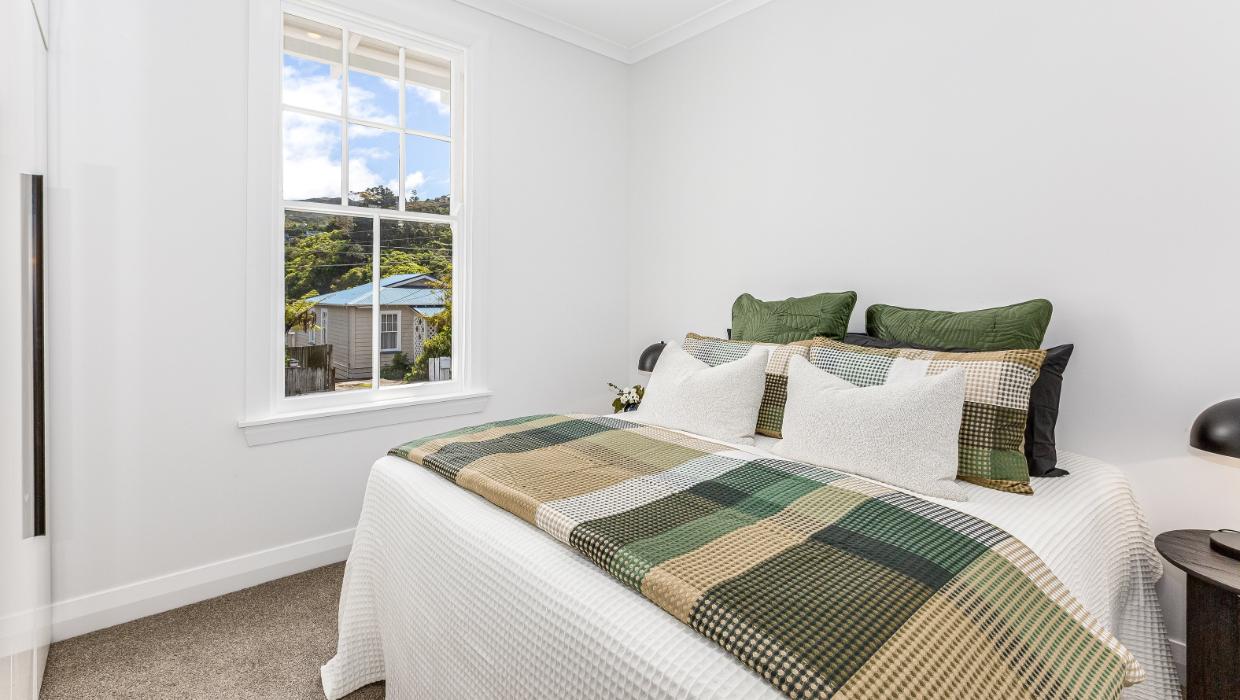
All the character features remain, including the sash windows. Photo: Tommy’s
Patterson says he painted everything white, including the fences, to make a stunning backdrop to the hedging plants as they grow large, and to contrast all the green of the grass. In time it will also contrast the colour of the flowers.
Hard landscaping at the rear includes the large deck and a pergola shade canopy. “We left the big cabbage tree for shade, and planted some fruit trees up the back, but there’s plenty of scope for new owners to add their own touch.”
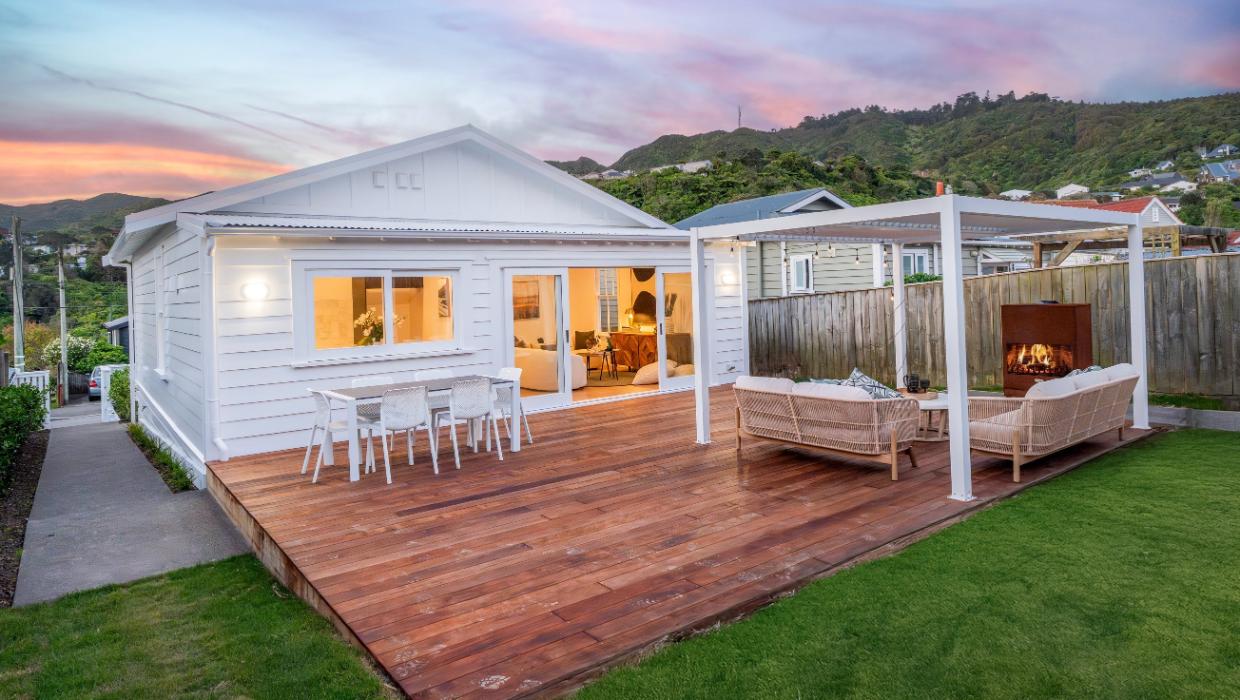
At 642m², the section is large by modern standards. Photo: Tommys
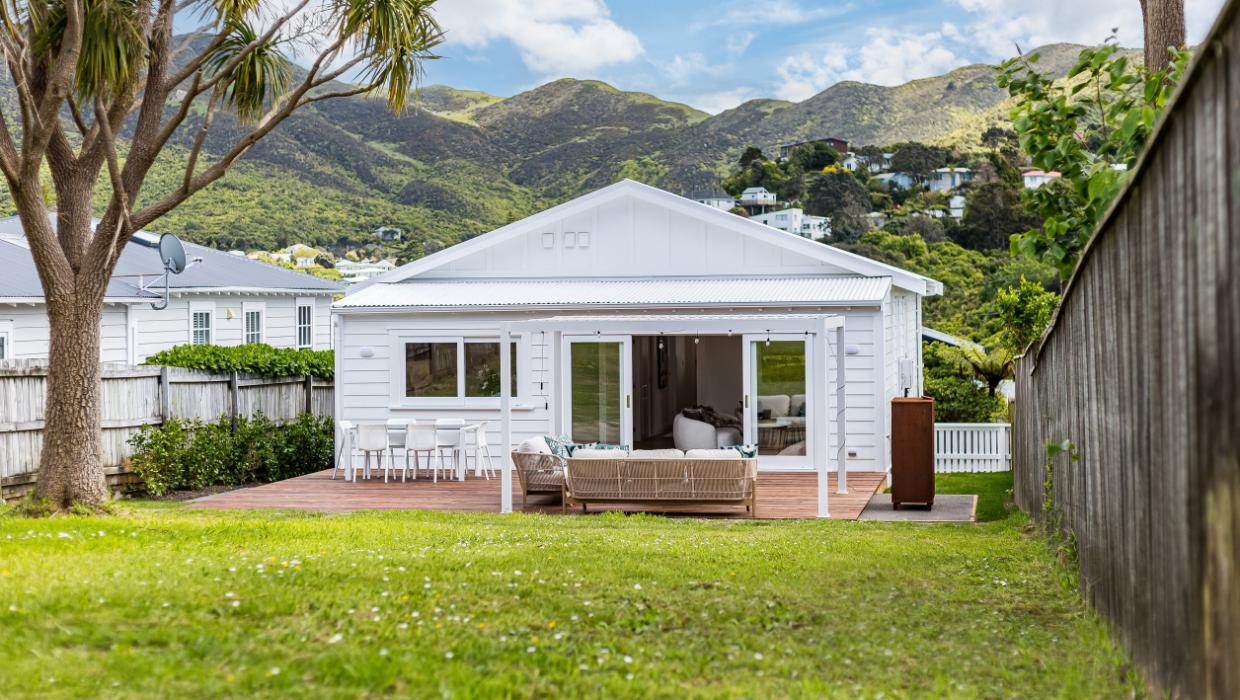
The builder-owner has purposely left a large area of lawn for families. Photo: Tommys
The Rail Heritage Trust of NZ says on its website that the Ngaio settlement was one of several in the North Island to feature mass-produced architecturally designed cottages. In what was one of this country’s earliest examples of kitset production, the timber, from railways-owned indigenous forests, was cut and numbered in a factory in Frankton and sent by rail to the settlements. Construction usually took a mere two to three weeks.
“When the factory closed in 1929 over 1591 houses plus other buildings had been made, the majority in the period 1924-27.”
The property, at 4 Ngata St, Ngaio, Wellington is being marketed by Sam Newble and Alice O’Styke of Tommy’s Real Estate Wellington. Enquiries are invited over $1.195 million.
Cotality puts the median property value in Ngaio at $978,720.
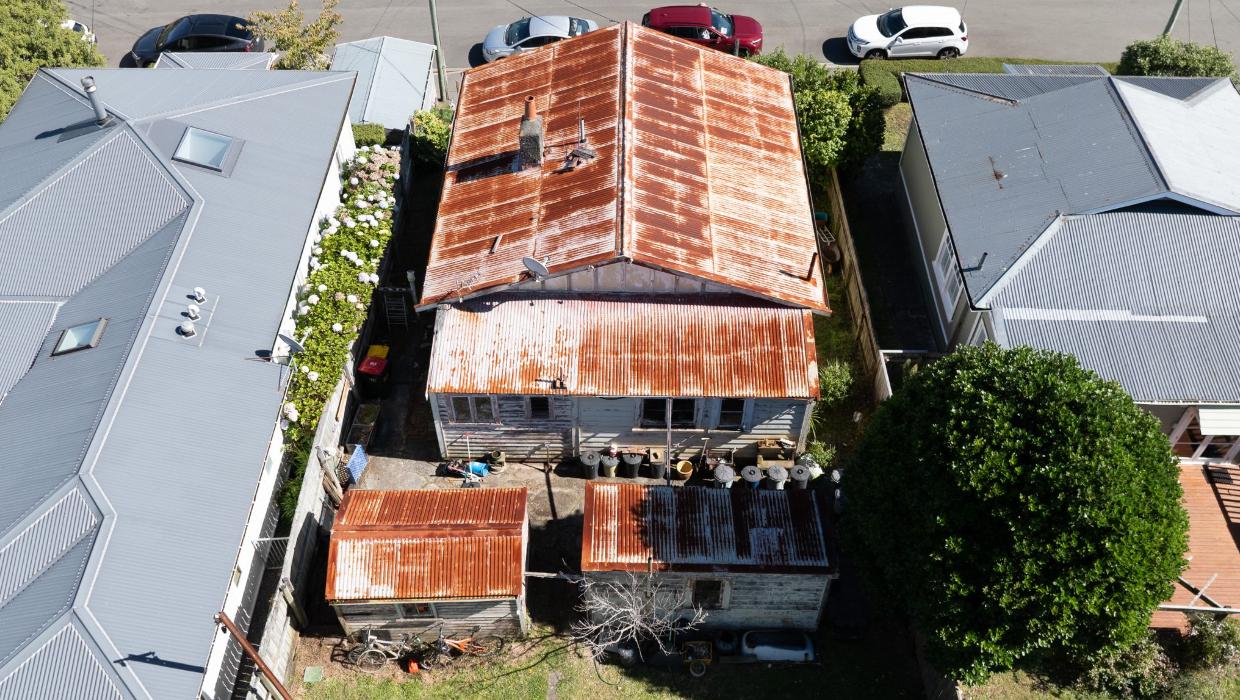
Before: The sheds at the rear have been removed to make way for the new landscaping. Re-roofing was just one of the hundreds of steps in the restoration. Photo: Collective